Pricing is where many good bids are lost. Price too high and you are screened out. Price too low, or forget a cost, and you win a contract that loses money. This guide gives you a simple, repeatable way to price a tender with confidence.
1. Understand how price is scored
Read the evaluation section first. Some tenders award the contract to the lowest compliant bid. Others combine a technical score and a price score. Knowing the method tells you whether to chase the lowest price or to invest in quality and show value.
2. Break the job into its parts
List every item in the bill of quantities, schedule of prices or terms of reference. For each line, work out the quantity, the unit and what it really takes to deliver: materials, labour, transport, equipment, supervision and any subcontractors. Price what the document asks for, in the order and format it uses.
3. Do not forget the hidden costs
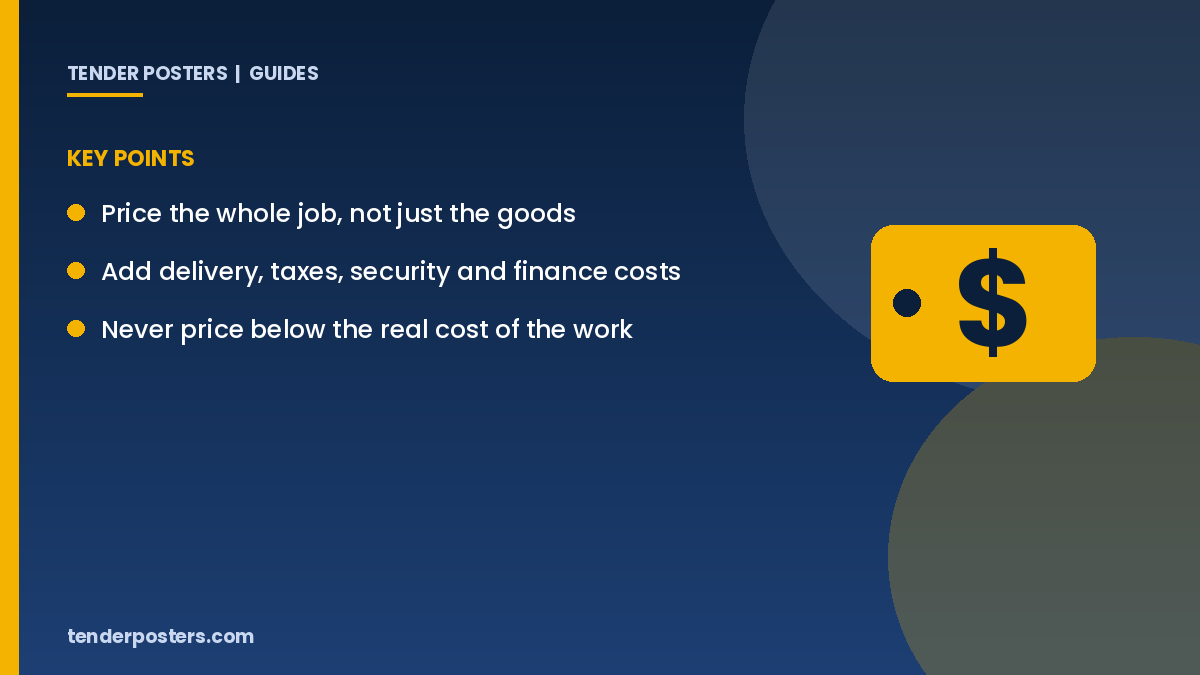
- Delivery and logistics to the buyer’s site, including fuel, loading and insurance in transit.
- Taxes and duties such as VAT, import duty or withholding tax, and whether the buyer expects prices inclusive or exclusive.
- Bid and performance security, bank charges and insurance premiums.
- Finance costs if the buyer pays 30, 60 or 90 days after delivery.
- Contingency for price changes, delays and rework.
4. Add a fair margin
Once your costs are complete, add overheads and a profit margin you can live with. A margin that is too thin leaves no room for surprises. A margin that is too fat can make you uncompetitive. Compare your numbers with recent similar jobs and, where it is published, with prices the buyer paid in the past.
5. Be careful with very low prices
Evaluators are often trained to question prices that are far below the others. An abnormally low bid may be asked to justify itself or be rejected. Price to win, but never below the real cost of doing the job properly.
6. Check the arithmetic and the format
Add every line again, check that totals, taxes and the currency match, and make sure the figure in words matches the figure in numbers. Fill every line of the price schedule, because blank lines can disqualify the bid. Use the exact currency and rounding the documents require.
7. Keep a price record
After every bid, record your price, the winning price when it is published, and the reasons you won or lost. Over time this becomes your best pricing tool.
Find tenders worth pricing
Good pricing starts with good opportunities. Follow new tenders every day on Tender Posters and choose the ones where your costs and experience give you a real advantage.
Browse every tender title free. Subscribe for full details, documents and a daily email of new tenders.
Browse tenders See plans Follow on WhatsApp