Many bidders skip the pre-bid meeting or never ask a question, and then guess at what the buyer wants. The bidders who use these opportunities usually write sharper, safer bids. This guide shows you how.
Why they matter
Tender documents cannot answer every question. A pre-bid meeting, a site visit or a written clarification round lets you resolve doubts about scope, quantities, access, timing and evaluation before you commit to a price.
1. Find the dates early
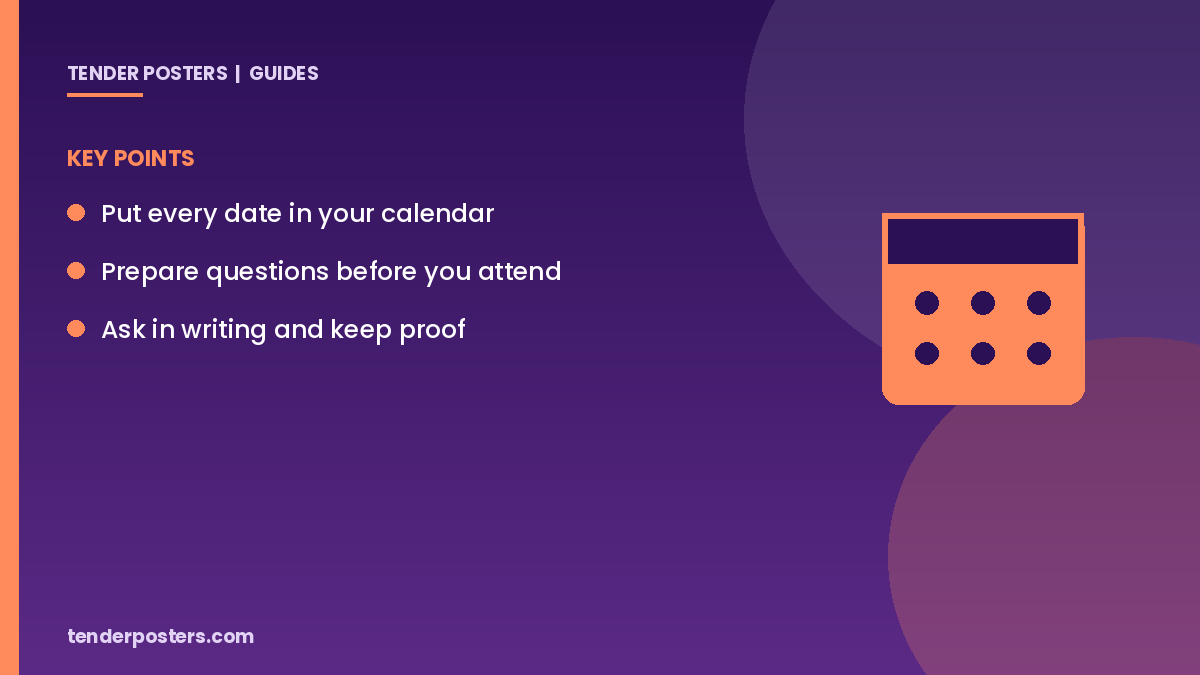
The tender notice or bidding documents state when the meeting or visit happens and the last date for questions. Put all of these in your calendar the day you decide to bid. Some tenders make attendance compulsory, and bidders who miss it are not allowed to submit.
2. Prepare before you go
Read the whole document first and mark everything that is unclear, contradictory or missing. Prepare a short list of questions, and bring a person who understands the technical side as well as someone who can take notes.
3. Questions worth asking
- Is the quantity or scope fixed, or can it change during the contract?
- How will the bids be evaluated, and what is the weighting of price and quality?
- What payment terms and timelines apply?
- Are there existing conditions on site that affect the work: access, power, water, security?
- Will any clarifications or changes be issued to all bidders in writing?
4. On a site visit, look and record
Take photos where it is allowed, measure what you can and note anything that affects cost: distance, ground, access roads, existing equipment and safety requirements. Sign the attendance sheet and keep a copy.
5. Put every question in writing
Verbal answers can change or be forgotten. Send your questions to the procuring entity by the stated deadline, using the contact and format required. Keep a copy and proof of sending. Official answers are usually shared with all bidders as clarifications or addenda.
6. Update your bid after changes
If the buyer changes the closing date, the specification or the quantities, adjust your price and documents to match. A bid based on the old version can be rejected as non-compliant.
7. Be professional and brief
Ask clearly and politely. Avoid giving away your pricing strategy in front of competitors, and never argue with the buyer in public. Your goal is to understand the job, not to impress the room.
Never miss the dates
Meeting dates and clarification deadlines arrive quickly. Follow new tenders on Tender Posters and open each notice early enough to attend, ask and prepare.
Browse every tender title free. Subscribe for full details, documents and a daily email of new tenders.
Browse tenders See plans Follow on WhatsApp