Large tenders often ask for experience, equipment or turnover that a small company cannot show alone. That does not mean the door is closed. By teaming up, small businesses can compete for contracts they could never bid for on their own. This guide explains the options and the risks.
Joint venture or subcontract?
In a joint venture or consortium, two or more companies bid together and share responsibility for the contract. In a subcontract, one company is the main bidder and hires others to carry out part of the work. The tender documents usually say which are allowed, and how experience and turnover are counted.
1. Check the rules first
Read what the buyer allows: whether joint ventures are permitted, whether one partner must be the lead, how much can be subcontracted and whether partners must be registered locally. Some tenders reserve a share of work for local or small companies, which can make you a valuable partner.
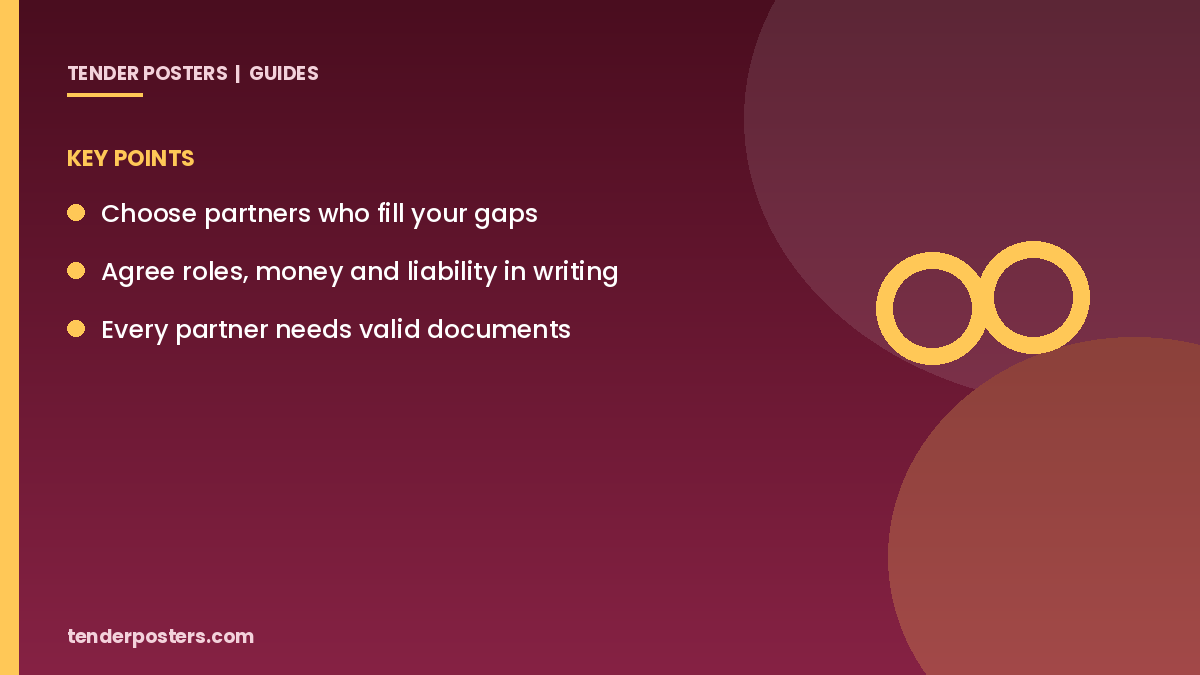
2. Choose partners who fill your gaps
The best partnerships combine strengths: one party with the track record and financial standing, another with local presence, equipment or technical skill. Look for partners with a clean compliance record, good references and a way of working you can trust.
3. Agree everything in writing
- Roles and scope: who does which part of the work.
- Share of the price and the profit, and how payments are received and split.
- Liability: who is responsible if something goes wrong, and for what.
- Securities and guarantees: who provides the bid bond and performance guarantee.
- Exit and disputes: what happens if a partner fails or the bid is lost.
4. Prepare the documents together
Each partner usually has to provide its own registration, tax clearance and references, and the joint venture agreement or a letter of intent must be included. Start collecting these early, because every partner’s documents must be valid on the closing date.
5. Present one clear bid
Evaluators should see a single, coherent team with clear responsibilities. Use the same format and terms throughout, and name the lead contact for questions.
6. Protect your business
Do not share confidential pricing with a partner who might also bid separately unless it is allowed and agreed. Get advice from a lawyer or an experienced procurement professional before you sign a joint venture agreement, because you may be responsible for the whole contract and not just your share.
Find the right opportunities
Look for larger tenders on Tender Posters, then ask which of them would be easier to win with a partner. Start building relationships now, so that you are ready when the right tender appears.
Browse every tender title free. Subscribe for full details, documents and a daily email of new tenders.
Browse tenders See plans Follow on WhatsApp