An addendum is an official change or clarification to the tender documents issued after publication. Missing one can make your bid non-compliant, so every serious bidder checks for them.
Why addenda happen
Buyers issue addenda to correct mistakes, answer bidder questions, change quantities or specifications, or extend the closing date. They normally apply to all bidders and become part of the tender documents.
1. Find them early and often
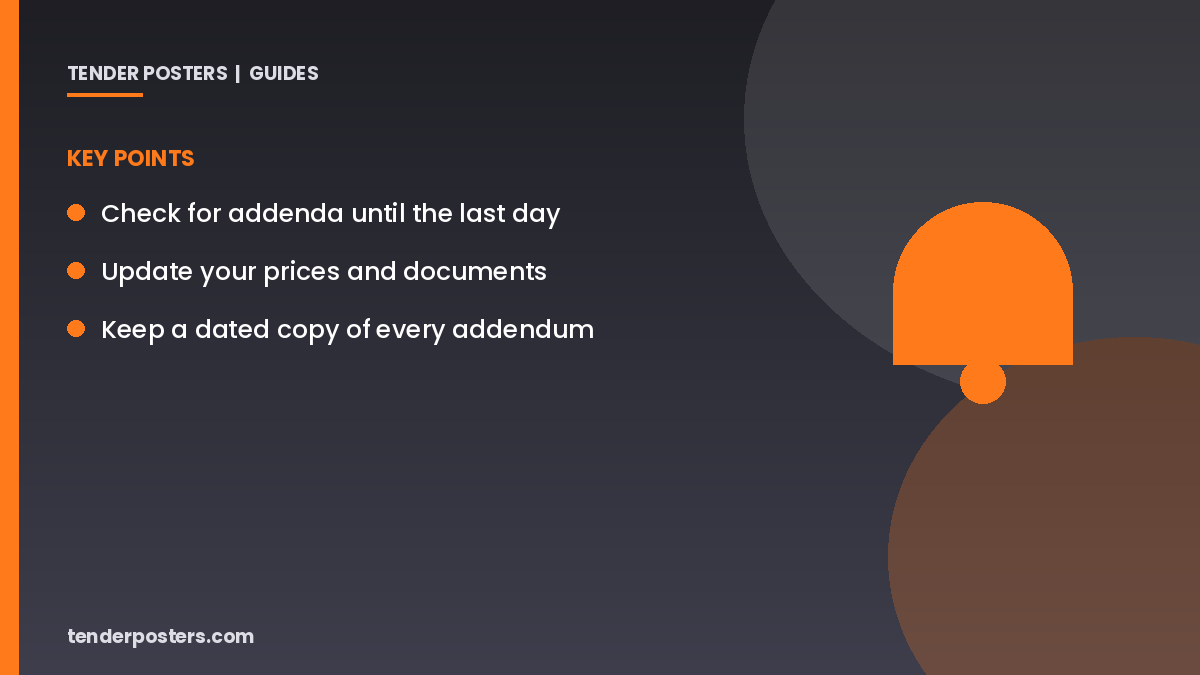
Check the tender page or portal where the original documents were published, and look for emails to registered bidders. Check again a few days before closing and on the last day, because late changes do happen.
2. Read what changed
- Closing date and time.
- Quantities, specifications or scope.
- Evaluation criteria or required documents.
- Answers to questions asked by other bidders.
3. Update your bid to match
Change your prices, documents and forms so they reflect the new version. Some tenders ask you to sign and return an acknowledgement of each addendum. Follow the instruction exactly.
4. Keep a record
Save every addendum with the date you received it. If a dispute arises, this record shows what you responded to.
5. Ask if something is unclear
If an addendum conflicts with the original document, ask the procuring entity in writing before the clarification deadline.
Do not rely on memory
Put a reminder to check for addenda in your bid checklist. Follow tenders on Tender Posters, and open the full notice again before you submit.
Browse every tender title free. Subscribe for full details, documents and a daily email of new tenders.
Browse tenders See plans Follow on WhatsApp